Architectural Debt: Beyond Technical Code – A Holistic Enterprise Perspective
Explore how architectural debt extends beyond technical code into business and strategic layers, impacting costs, risks, and long-term strategy. Learn to identify and tackle these pervasive challenges for better organizational outcomes.

As a developer, a significant portion of our daily frustrations stemmed from technical debt (the other half being estimates treated as rigid deadlines). We consistently differentiated between "code debt"—temporary hacks introduced to meet deadlines and never remediated—and "architectural debt," which refers to fundamental structural decisions that lead to significant issues months down the line. While adopting software patterns like the strangler pattern or refactoring away from singletons certainly falls under software architecture, true architectural debt extends far beyond the codebase itself.
The Modern View of Technical Architectural Debt
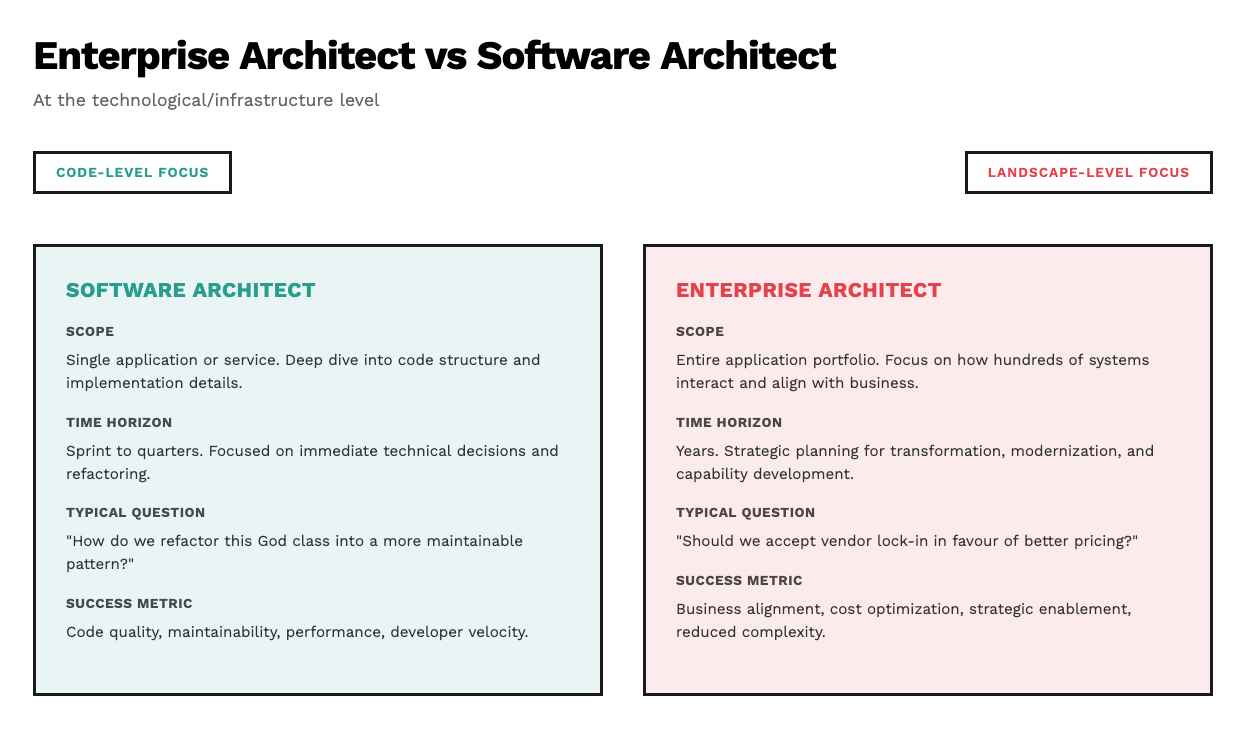
Today, as an enterprise architect, my primary concerns largely echo my past frustrations: architectural debt and the misinterpretation of estimates as deadlines. However, my focus has shifted. I'm less preoccupied with the internal workings of individual software components—a practical impossibility given organizations often manage hundreds of applications. Instead, my attention is drawn to how these applications integrate within the broader IT landscape: scrutinizing data flow, data residency, identifying bottlenecks, determining maintenance responsibilities, and defining each application's future role.
In an enterprise environment, this complexity is unavoidable. With numerous applications, many of which are third-party SaaS solutions, it's crucial to manage what's within your control and strategically adapt to what isn't.
Beyond Technical Layers: The Full Spectrum of Architectural Debt
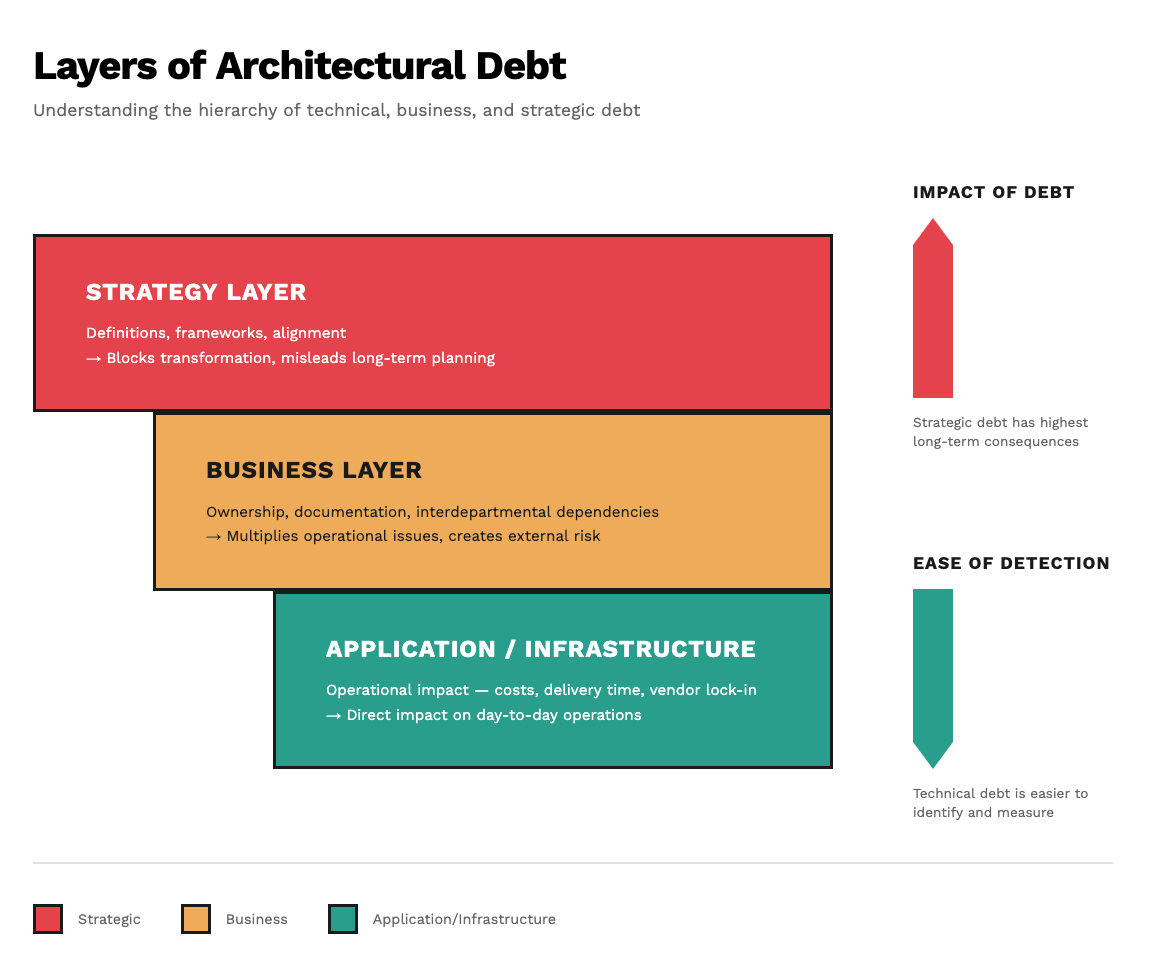
Architectural debt is not confined to technical layers; enterprise architecture encompasses much more than just technical considerations. While technical architectural debt can certainly cause significant operational headaches, debt accumulating within the business and strategy layers can inflict even greater damage. Let's explore these issues across each layer.
Application / Infrastructure Layer
As mentioned, enterprise architecture (EA) should not delve into code-level details; that's the domain of software developers and leads who are immersed in the code daily. EAs can suggest patterns or ideas (e.g., event sourcing for suitable applications) but ultimately, the development teams determine code structure and maintenance.
My focus here is on integration patterns. For instance, if an organization uses sFTP for file transfers alongside a REST API, exploring a unified REST-based approach could streamline operations. Similarly, examining existing systems for functional overlap (e.g., disparate file storage solutions like SharePoint and AWS S3) can reveal opportunities for consolidation. Vendor lock-in is another critical concern: balancing volume discounts from a single vendor against the significant migration costs and operational dependency that can arise.
Debt at this layer directly impacts operations, leading to increased costs and longer delivery times.
Business Layer
Similar to the application/infrastructure layer, our focus isn't on granular details like departmental headcounts or precise role definitions. Instead, we concentrate on crucial aspects such as ownership and stewardship. Who is accountable if an application fails or a data breach occurs? Who are the key individuals to engage when modernizing a department? While department heads and stakeholders are essential, departments and their processes are inherently interconnected, much like applications. Modernizing one department's processes without considering its impact on others can disrupt operations across the organization.
Consider the consequences of outdated or phantom processes. Providing inaccurate business process documentation to a new hire is problematic, but the implications are far more severe if that documentation is reviewed by an auditor.
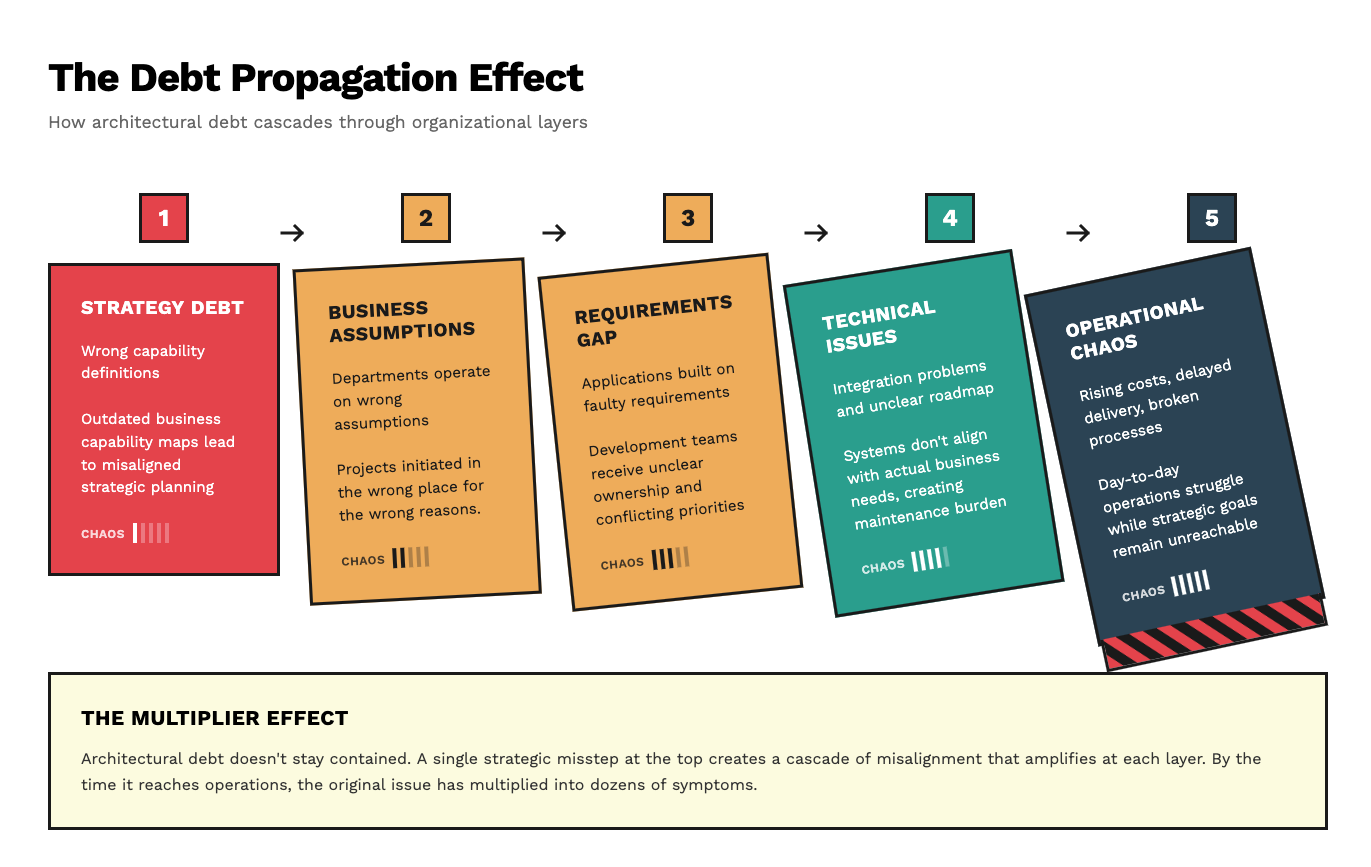
At this level, architectural debt manifests as poor documentation, incorrect assumptions about departmental workflows, roles, and necessary resources. If decisions are made based on faulty premises, projects are likely to start on the wrong foot.
Issues here directly contribute to increased costs and external risks, often amplifying operational problems.
Strategy Layer
An enterprise architect's role is not to dictate strategy, but to empower those who define it by providing robust insights. This requires having well-ordered foundational information. The quality of insights directly correlates with the potential success of strategic outcomes.
Key forms of debt at this layer include mis-defined concepts and incomplete frameworks. Business Capability Maps, for instance, are invaluable for understanding organizational strengths and weaknesses. A comprehensive capability maturity assessment, where each capability is scored against chosen parameters, can highlight areas for improvement that align with strategic vision.
However, if these capabilities are incorrectly defined, the map is outdated, or it's merely a siloed departmental overview rather than a true capability map, the organization risks basing its 3-5 year strategy on fundamentally flawed assumptions.
Debt at this level carries enormous long-term consequences, potentially hindering transformation efforts and even making detrimental long-term strategies appear appealing.
Tackling Architectural Debt
Fortunately, enterprise architects possess distinct advantages over developers in addressing architectural debt: dedicated time and broad organizational visibility. We have the resources to build compelling dashboards, gather tangible evidence of issues, and access key decision-makers to advocate for change.
Our approach should involve clearly demonstrating misalignments to CIOs or COOs, often more effectively through presentations and dashboards than through discussions about refactoring a "God class" into a command-bus pattern. Maintaining a comprehensive inventory is crucial. I meticulously document what I consider debt in my architecture tools and maintain a prioritized list of issues to tackle.
Building a strong case involves consolidating gathered data, outlining the "AS-IS" and "TO-BE" states, and presenting a business case detailing the benefits of improvements and the risks of inaction. From there, it's about strategic prioritization. Some architectural debt is more tolerable in certain contexts, such as innovation projects versus systems of record. While innovation projects might allow for more flexibility, the debt must be addressed once the innovation phase concludes.
Finally, be prepared that the most common response might be, "Okay, you can go out and fix it." Therefore, ensure you have the bandwidth and resources to actually implement the solutions, as merely flagging the debt won't make it disappear.