Book Review: Kotlin for Java Developers
This review evaluates "Kotlin for Java Developers," a Packt publication, highlighting its "problem-reasoning-solution" approach for transitioning Java professionals to Kotlin. It covers OOP, functional programming, and coroutines, offering practical insights and code snippets for experienced developers.
This review provides an in-depth look at "Kotlin for Java Developers," a 414-page book published by Packt in October 2025. The reviewer received this book as part of a collaboration with Packt.
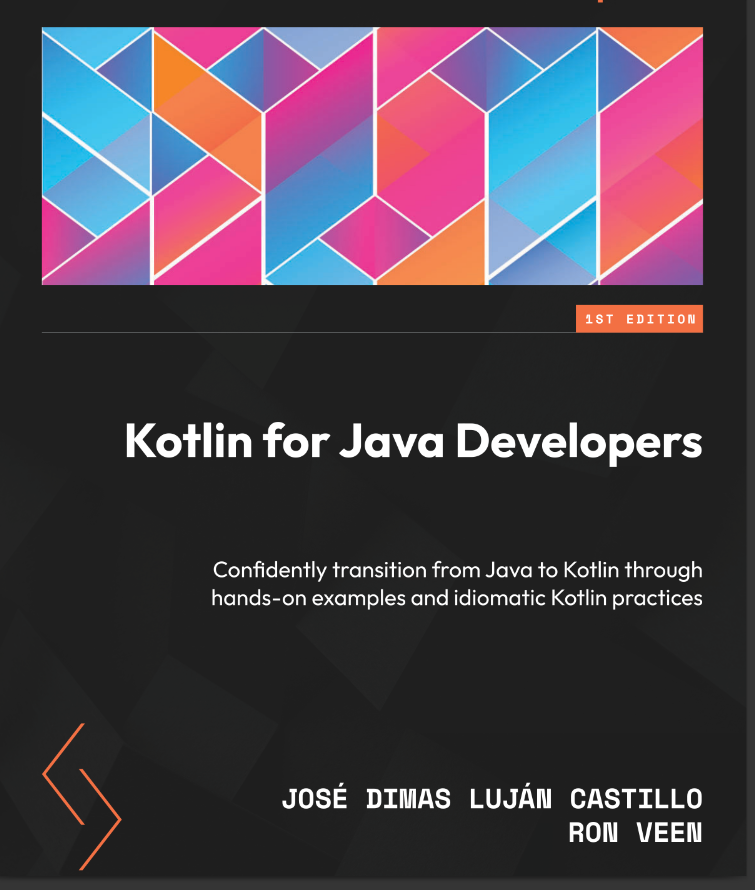
In Brief
"Kotlin for Java Developers" adopts a "problem-reasoning-solution" methodology to introduce the core concepts that distinguish Kotlin from Java. It is neither a comprehensive Kotlin reference nor a guide for beginners learning to program from scratch. In the reviewer's opinion, the book successfully delivers on its stated objectives.
Context and Approach
Working professionally with both Java and Kotlin, the reviewer constantly seeks educational materials to enhance student knowledge. This book is deemed an excellent supplementary resource. Its value proposition, clearly stated on the cover, is to "Confidently transition from Java to Kotlin through hands-on examples and idiomatic Kotlin practices." While the book generally achieves this, the writing style in the initial two chapters can be somewhat challenging.
A Gradual Ascent to Mastery
The book is structured into four main sections:
- Getting Started with Kotlin
- Object-Oriented Programming
- Functional Programming
- Coroutines, Testing, and DSLs
The initial section, particularly the first two chapters, was the least favorite part. Chapter one offers a superficial overview of Kotlin versus Java, which felt largely unnecessary, as topics are revisited in greater detail later. Chapter two briefly touches on Maven and Gradle without sufficient depth, a missed opportunity for a book aimed at Java developers who might expect more details on build process plugins and their interaction with Maven lifecycles. The book instead defers this responsibility to IDE wizards.
However, a significant improvement begins from chapter three onwards. The book truly takes off, and its value proposition becomes evident. The writing style transforms, consistently presenting concepts through a structured approach:
- A common problem, often from a Java perspective, is discussed.
- The Kotlin design decision, aimed at improving the problem, is presented.
- A concise, self-contained Kotlin code snippet illustrates the programming concept.
This practical, snippet-driven approach is a major strength. Learning a new programming language as an experienced developer differs from learning to code for the first time. The book acknowledges this by discussing Kotlin's technical value propositions with actionable examples that readers can experiment with or download from the official repository. This progression is likened to Apollo 11's ascent.
Part I delves into fundamental concepts such as null and non-nullable types, alongside extension functions and the apply function. Part II expands on object-oriented programming basics, generics and variance, and data and sealed classes. As this isn't a reference manual, it effectively covers each concept without delving into obscure edge cases. The book can be completed in approximately a week, providing a solid foundation for further specialization in areas like Android development or Kotlin backend programming.
A noticeable shift occurs from Part III, moving from a Java-centric perspective into idiomatic Kotlin. Java-only developers will likely observe this as the book introduces more abstract structures that lack direct Java equivalents. Part III covers the basics of functional programming, lambdas, and collections and sequences, all presented in the "Kotlin way." Part IV then explores coroutines and synchronous and asynchronous programming.
Finally, the book introduces two topics crucial for daily development but not strictly part of the language: Kotlin testing and Domain-Specific Languages (DSLs).
Areas for Improvement
While largely enjoyable, a few points could potentially cause confusion:
- The null safety chapter omits any mention of Java's
Optional. - The coroutines section briefly mentions Virtual Threads but then frames Project Loom as a separate effort, comparing it to Quasar. In reality, Virtual Threads are an integral part of Project Loom.
- JDK recommendations are inconsistent across chapters, sometimes suggesting Corretto and at other times OpenJDK.
- Most examples recommend Java 17, likely reflecting the time of writing. However, all samples were successfully tested with Java 25 (the latest LTS at the time of this review) and should work fine with Java 21 (officially supported by the Kotlin compiler).
These points are minor and do not detract significantly from the overall quality of the book.
Recommended Audience
This book is highly recommended for Java developers exploring the Kotlin ecosystem, those interested in Android development, or professionals considering Kotlin as their primary programming language.