Laravel Ecosystem Monthly Update: Reverb, Valkey, Forge, Nightwatch & More
Discover the latest Laravel ecosystem updates, including Laravel Reverb WebSockets GA, Valkey developer preview, new Laravel Cloud regions, Forge enhancements, Nightwatch improvements, and new features in Laravel 12.x.
This month brings significant advancements across the Laravel ecosystem, featuring the general availability of Laravel Reverb-powered WebSockets, the developer preview of Laravel Valkey, and a new Canada region in Laravel Cloud. Laravel Forge enhances its offerings with AWS EBS gp3 volume provisioning, PostgreSQL 18 support, and improved SSL certificate management. Laravel Nightwatch boasts entirely rewritten documentation and enforceable multi-factor authentication. Furthermore, Laravel 12.x introduces new scheduling, validation, queueing, and helper improvements, impacting the entire open-source ecosystem.
Laravel Cloud
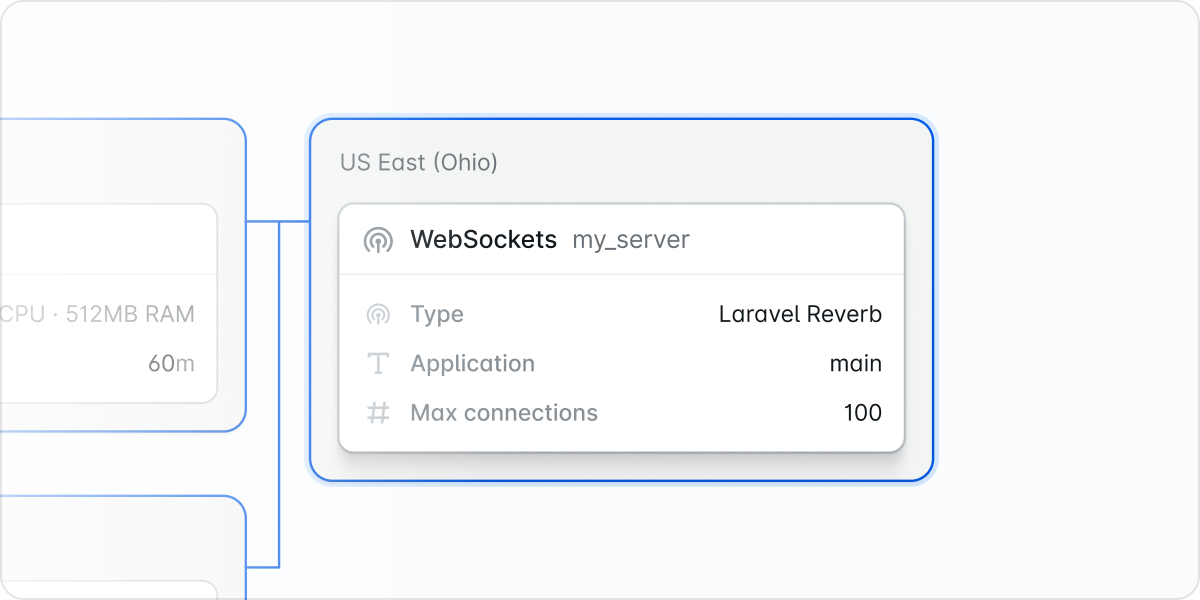
Reverb WebSockets Now Generally Available
WebSockets for Laravel Cloud are now Generally Available (GA), powered by Laravel Reverb. This enables seamless deployment of real-time communication features like notifications, chat, and collaboration without the burden of infrastructure management. Laravel Cloud includes a dedicated dashboard for connection monitoring. Learn more or start for free.
Valkey Developer Preview
Laravel Valkey is now available in developer preview. This high-performance, open-source key-value store offers Redis compatibility, making it ideal for queues, caching, analytics, and session management. Enable Valkey in your Laravel Cloud dashboard or sign up to begin.

New Canada Region
Laravel Cloud has expanded its global presence with a new ca-central region. This brings deployments closer to Canadian users and helps meet data residency requirements. See all available regions.
gRPC PHP Extension
Laravel Cloud now supports the gRPC PHP extension, facilitating high-performance communication with gRPC services and APIs. Check out all available PHP extensions on Cloud.
Read the full Laravel Cloud changelog to learn more.
Laravel Forge
Provision AWS Servers with EBS gp3
Laravel Forge now supports provisioning AWS servers with EBS gp3 volumes. While existing AWS servers will continue using gp2 by default, all newly created servers will automatically utilize gp3 for enhanced performance. Deploy a server.
Introducing Support for PostgreSQL 18

Forge now supports PostgreSQL 18 for new server deployments, including Laravel VPS. Learn more about databases in Forge.
SSL Certificate Information
The SSL certificate interface has been upgraded for improved visibility and clarity. Certificate cards now prominently display domains, status, and both issue and expiration dates. Log in to see the improved SSL certificate UI.
Read the full Laravel Forge changelog.
Laravel Nightwatch
New Nightwatch Documentation
The Nightwatch documentation has been completely rewritten from the ground up. It now comprehensively covers all event types, configuration of sampling, filtering, and redaction, and includes practical examples for common setups. Explore the updated docs.
Richer Log Context
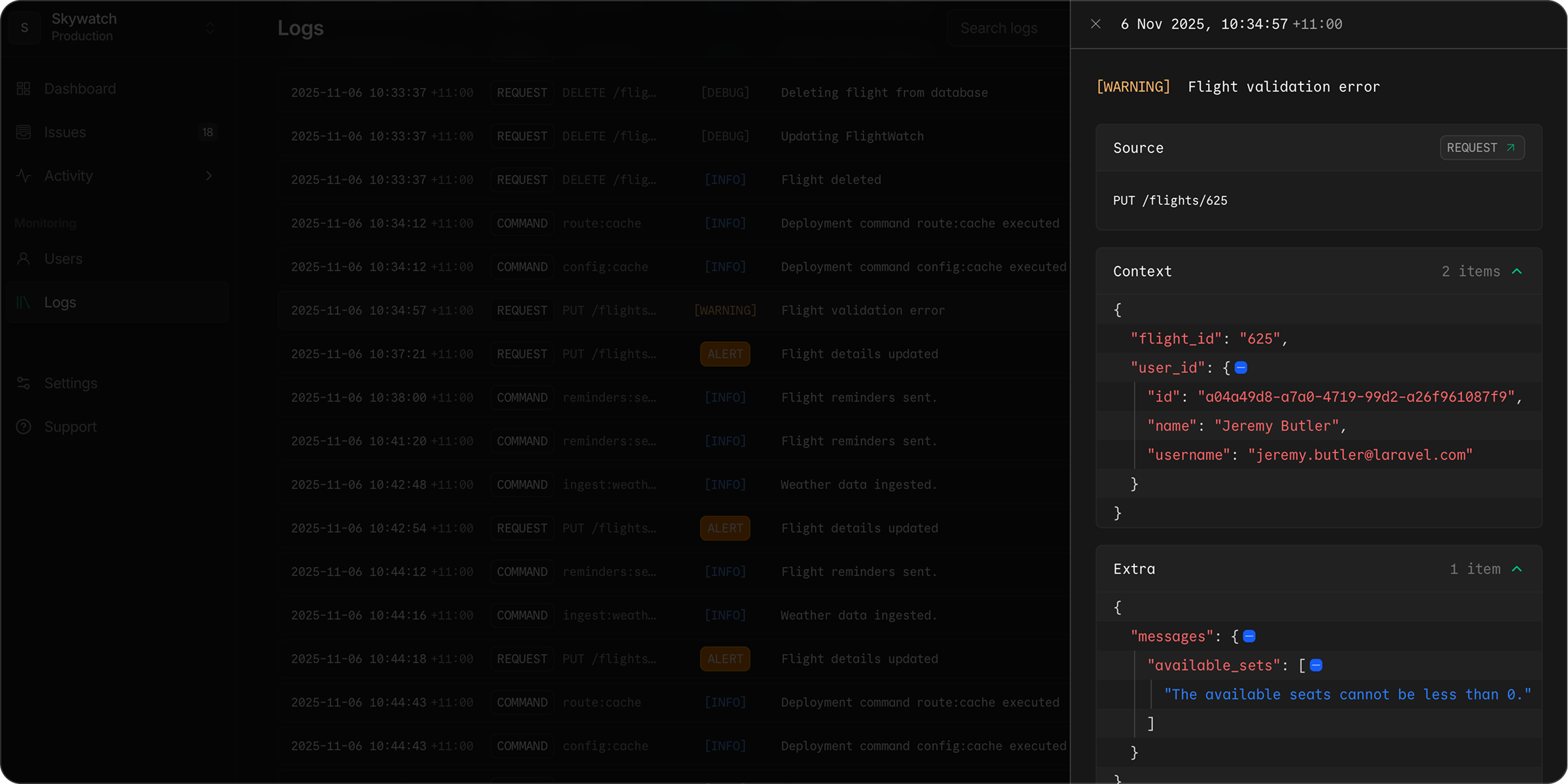
Log entries in Nightwatch now support the full range of contextual data available in Laravel. You can select any entry to view both Context and Extra payloads, offering deeper insights into your application's behavior. Sign in to Nightwatch or start for free to gain deep insights into your Laravel app.
Enforceable MFA
Organizations can now mandate multi-factor authentication (MFA) for all team members. Users will be required to set up MFA before gaining access to organization data. Learn more about Organizations.
Issues Scoped to Environment
The Issues list now automatically filters based on your selected environment, making it easier to focus on relevant problems while still indicating where else issues might appear. Learn more.
Read the full Nightwatch changelog for more information.
Laravel Framework 12.x
Laravel 12.x continues to evolve with several impactful improvements:
Schedule Tasks on Specific Days
A new daysOfMonth() method offers a clean API for scheduling tasks on multiple arbitrary days of the month.
Encoding Validation Rule
An innovative encoding validation rule ensures that uploaded files adhere to expected encodings prior to processing, enhancing file integrity and security.
Interval Helper Functions
New interval helper functions simplify working with fluent time adjustments within your code, promoting cleaner and more readable temporal logic.
Pause and Resume Queue Workers
New Artisan commands provide the ability to temporarily pause queue workers from processing new jobs and resume them at a later time, offering greater control over job execution.
New Blade @hasStack Directive
The new @hasStack directive conditionally renders content only if a Blade stack contains output, enabling more dynamic and efficient UI rendering.
Read the full Laravel Framework changelog for a comprehensive list of updates.
Inertia
The Inertia site and documentation have undergone a complete redesign. The refreshed website highlights Inertia's flexibility, while the updated documentation features cleaner formatting, an AI chat assistant, and improved search capabilities. Visit the new site and browse the docs.
Boost
Boost introduces several new features and improvements:
Gemini Support
Boost now supports Google Gemini, completing its compatibility with all major code environments.
User Guidelines Take Priority
User-defined guidelines now take precedence over Boost's default presets, offering greater customization.
Sail Support
Boost now includes first-class Sail support and automatically leverages Sail commands when detected in your project.
Filament Guidelines Moved
Filament guidelines have been moved directly into the Filament package, ensuring they remain automatically up to date.
OpenCode Support
Boost now integrates OpenCode directly into developer workflows, streamlining code generation and development processes.
Laravel MCP
_meta Support
Laravel MCP (Meta-Content Protocol) now supports the _meta field across its tools, prompts, results, and content. This enhancement simplifies the attachment of relevant metadata to executions, improving data management and traceability.