Mastering Microservices: 4 Essential Architectural Patterns
Explore four fundamental microservices patterns: Database Per Service, Shared Database, API Composition, and CQRS with Event Sourcing, to simplify complex system design and development.
Developing microservices can be a complex endeavor, often leading to architectural challenges if not approached strategically. To simplify this journey and ensure a more robust system, understanding fundamental microservices patterns is crucial. This article explores four essential patterns designed to streamline your microservice development:
Database Per Service
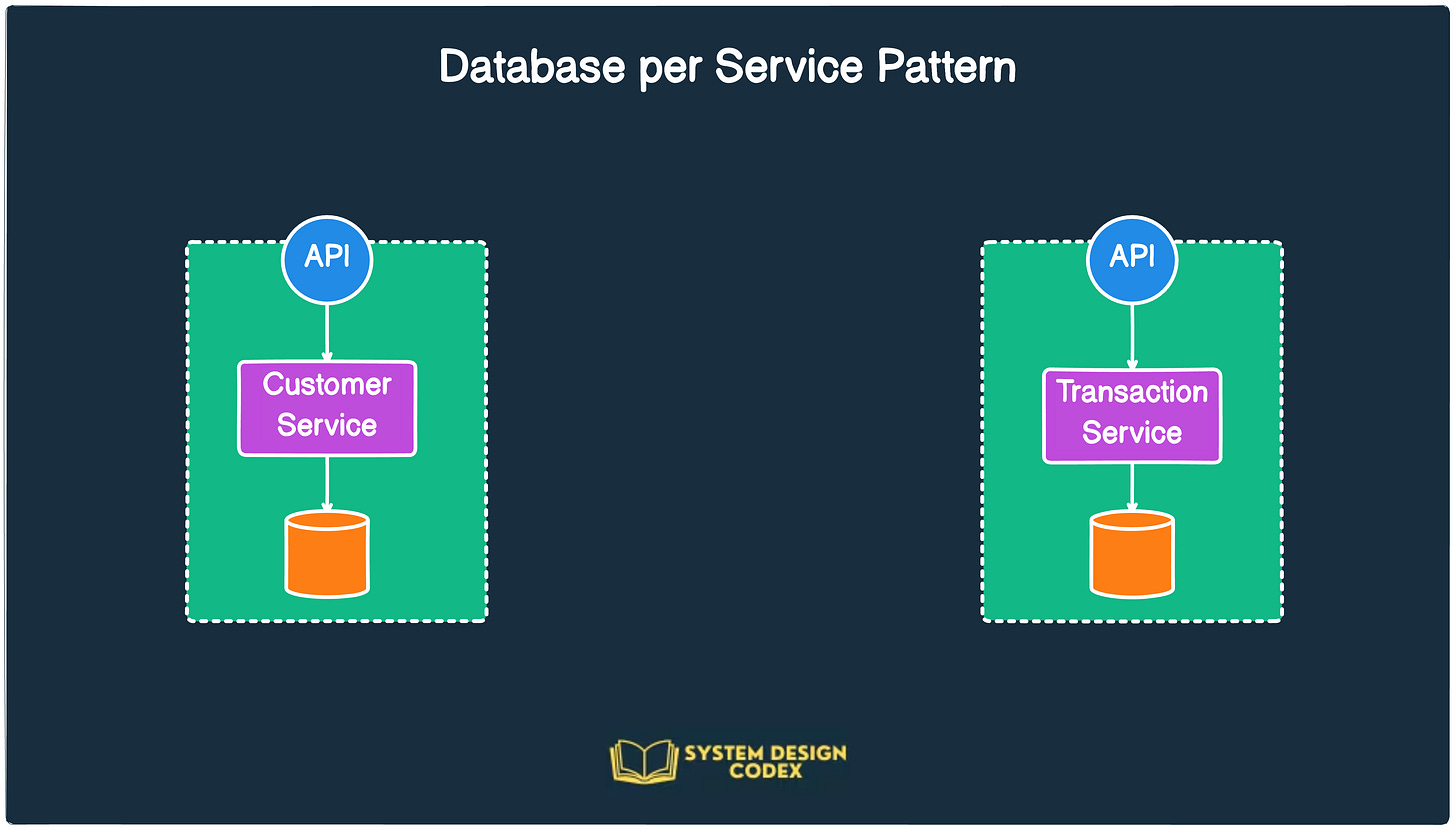
As its name suggests, the Database Per Service pattern dictates that each microservice maintains and manages its own independent data store. This separation ensures that no other microservice can directly access or modify another's data; all interactions must occur through well-defined APIs. While straightforward for greenfield projects, migrating existing monolithic applications can present challenges in defining clear service boundaries and refactoring informal data access. Key considerations for this pattern include establishing clear bounded contexts for each service and managing business transactions that span across multiple microservices.
Shared Database
The Shared Database pattern, while sometimes considered an anti-pattern in pure microservices philosophy, offers a more lenient approach where multiple microservices access a single, shared database. This can be particularly advantageous during the migration of monolithic applications, allowing for gradual evolution of the application layer without immediate database redesigns.

However, this convenience comes at a cost, eroding some core microservices benefits. It necessitates strict coordination among development teams for schema changes and can lead to runtime conflicts when multiple services contend for the same database resources.
API Composition
The API Composition pattern addresses the challenge of executing complex queries across multiple microservices. An API composer orchestrates calls to various services, aggregates their responses, and then performs an in-memory join of the collected data before presenting it to the client. A notable drawback of this approach is its potential inefficiency, especially when dealing with large datasets and the overhead of in-memory joins.

CQRS and Event Sourcing
CQRS (Command Query Responsibility Segregation) and Event Sourcing are powerful patterns often used in conjunction. CQRS separates read and write operations, allowing an application to listen to domain events from other microservices and update a dedicated query-optimized database. This enables efficient handling of complex aggregation queries and independent scaling of read models.
Event Sourcing complements CQRS by persisting the state of an entity as an immutable sequence of events. Every change or update to an object generates a new event, which is then stored in an event store. Together, CQRS and Event Sourcing offer robust solutions for event handling, data consistency, and flexible scaling of read/write operations.

However, these patterns introduce a higher level of complexity due to their unfamiliar paradigm for many developers and the increased number of components to manage.