Meta Kills Native WhatsApp on Windows 11, Reverts to Resource-Hogging WebView App
Meta has replaced the native WhatsApp for Windows 11 with a WebView2 wrapper, drastically increasing RAM usage (up to 3GB) and degrading performance, likely due to recent layoffs.
Meta has reportedly delivered a "major" upgrade to its WhatsApp application for Windows 11, though users are unlikely to find it an improvement. The app now loads web.whatsapp.com within a WebView2 container, effectively abandoning its native WinUI/UWP foundation and reverting to a web wrapper. This change marks a significant regression in performance, transforming the application into what many are calling "absolute garbage" in terms of efficiency.
WhatsApp's journey on Windows has been circuitous, moving from an Electron-based web wrapper to a native UWP app, and now, after years of development, back to a WebView2 wrapper.
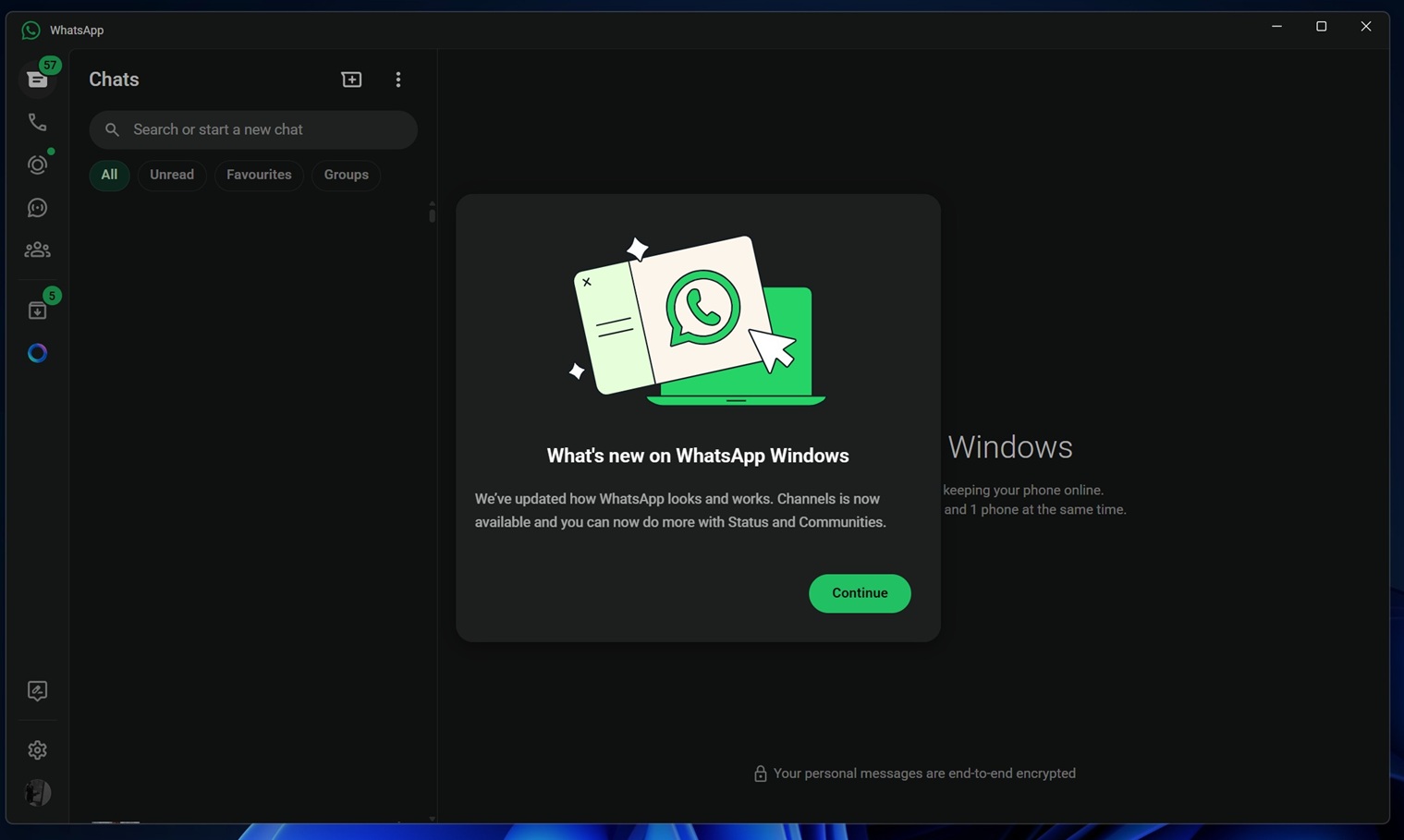
This strategic shift is speculated to be a consequence of recent layoffs at Mark Zuckerberg-headed Meta, which may have led to the disbandment of the native WhatsApp development team. While this move could reduce maintenance costs for Meta by unifying the codebase, it comes at a steep cost to user experience.
The performance degradation of the new WhatsApp for Windows 11 is stark. Initial tests reveal that the new Chromium/WebView2-based app consumes approximately 300MB of RAM on the login screen, even when idle. In contrast, the previous native version used a mere 18MB, often dropping below 10MB when left inactive.
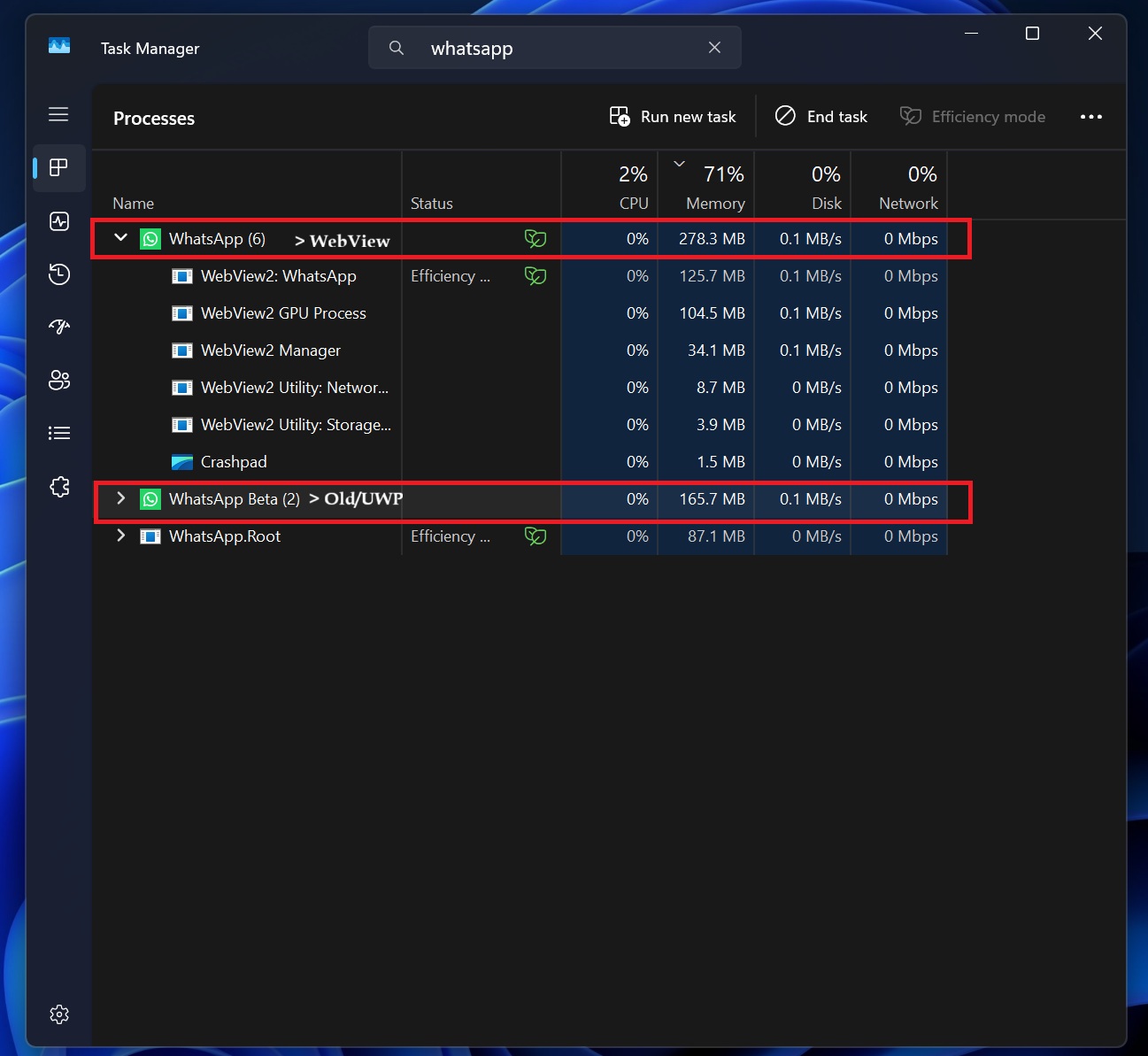
Upon logging in and attempting to load chats, the new WhatsApp's memory usage surged to 2GB. When left idle in the background, it consistently utilized around 1.2GB of RAM. For comparison, the native WhatsApp typically ran on about 190MB, occasionally dipping below 100MB when fully idle, and only reaching 300MB during exceptionally active conversations. With numerous active chats, the new WebView2-based WhatsApp for Windows 11 can reportedly consume up to 3GB of RAM.
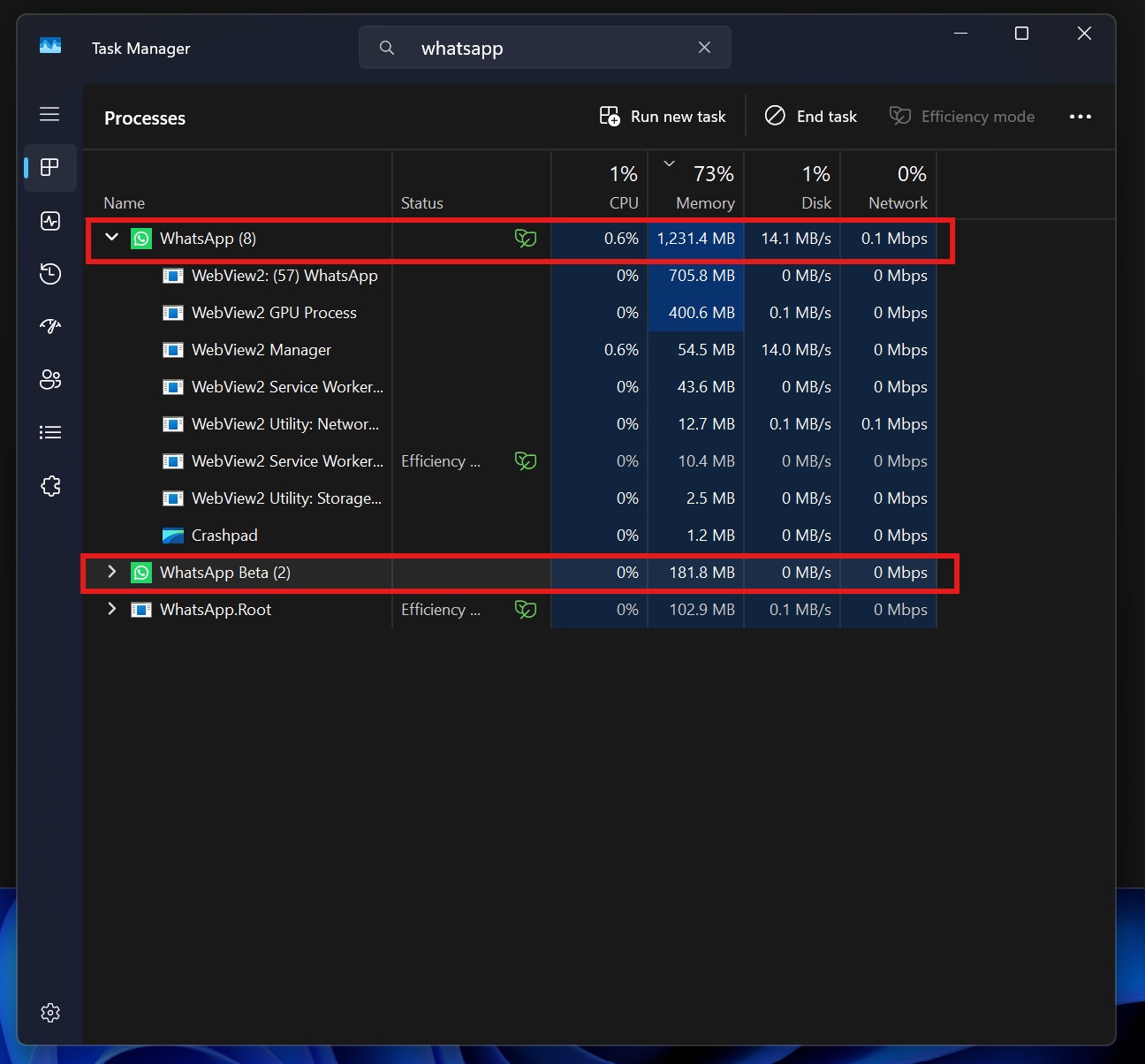 In the screenshot: "WhatsApp" denotes the new WebView2 version, while "WhatsApp Beta" refers to the older UWP/WinUI native app.
Such excessive resource consumption and sluggish performance make the new app a genuine "performance nightmare." Users will notice significant delays, long loading times, and general unresponsiveness when navigating between conversations. Furthermore, the application reportedly struggles with Windows notifications, Windows 11’s Do Not Disturb mode, and Active Hours, leading to delayed alerts and a less integrated user experience.
While users might be able to postpone this "upgrade" for a short period by not updating, version 2.2584.3.0 is rolling out via the Microsoft Store and is set to replace the native (WinUI/UWP) app across all regions. It's anticipated that all users will eventually be logged out of their native apps and compelled to use the WebView2-based version. Many experts suggest that using web.whatsapp.com directly in a browser like Edge or Chrome offers a superior and less resource-intensive experience compared to the new WebView2 container app.
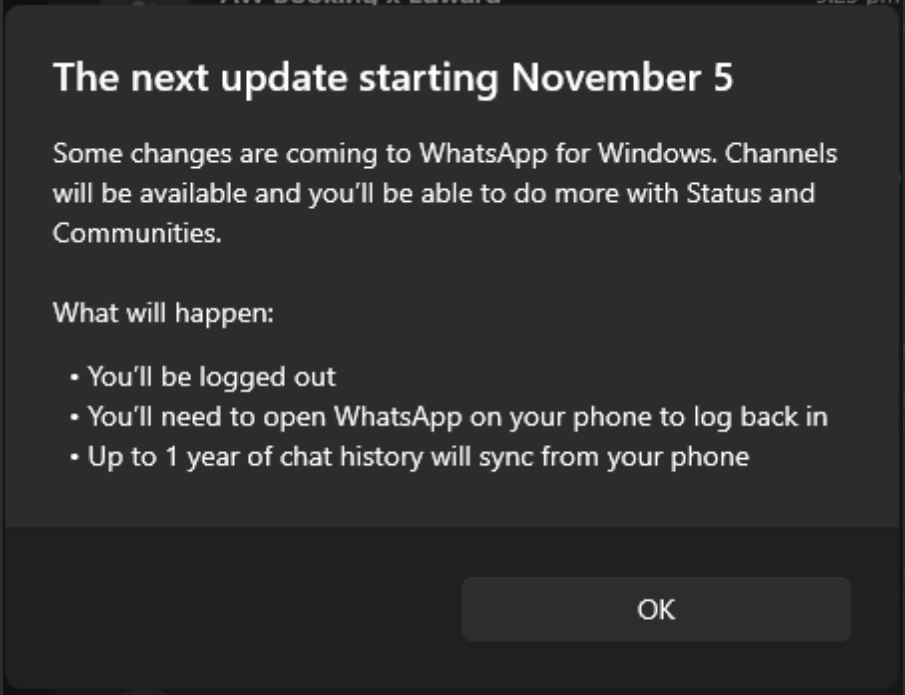 Image Courtesy: WindowsLatest.com
This shift comes at a peculiar time, as WhatsApp rolls out a native experience for the Apple Watch, a platform with significantly fewer users than Windows' over one billion active monthly devices. This raises questions about Meta's app development priorities and echoes the sentiment that even Microsoft itself sometimes moves away from native app development for Windows.