Ron Gilbert on Escaping Monkey Island: A Pivot to Action, Lost RPGs, and the Future of Game Design
Veteran game designer Ron Gilbert discusses his transition from classic adventure games like Monkey Island to the action-survival rogue-lite 'Death by Scrolling,' alongside his abandoned RPG project, his 'Eat the Rich' philosophy, and critical observations on game publishing, crowdfunding, and the evolving landscape of interactive storytelling.
Ron Gilbert, renowned for his extensive work on classic point-and-click adventure games such as Maniac Mansion, Indiana Jones and the Last Crusade, the Monkey Island series, and Thimbleweed Park, recently surprised many with the October release of Death by Scrolling. This rogue-lite action-survival pseudo-shoot-'em-up marks a significant departure from his established genre.
Gilbert, however, notes that his past catalog isn't solely confined to adventure games, referencing reflex-based titles like Humongous Entertainment's Backyard Sports series and 2010's Deathspank. His return to action-oriented game design was inspired by modern classics such as Binding of Isaac, Nuclear Throne, and Dead Cells. "While I'm certainly mostly known for adventure games... it probably is a little bit of a departure for me," Gilbert shared, explaining that the idea to create such a game began as a whim.

Gilbert’s Lost RPG
Following years dedicated to adventure game development with Thimbleweed Park (2017) and Return to Monkey Island (2022), Gilbert initially envisioned "something new" as his next project: a large, open-world RPG akin to The Legend of Zelda. After spending approximately a year with an artist and designer, he realized his three-person team lacked the financial and temporal resources to bring his grand vision to fruition. "You know, it’s either a passion project you spent 10 years on, or you just need a bunch of money to be able to hire people and resources," he commented.
Securing funding for a top-down action-RPG proved unexpectedly challenging. Gilbert found publisher offers "horrible," attributing this largely to the genre itself. "Doing a pixelated old-school Zelda thing isn’t the big, hot item, so publishers look at us, and they didn’t look at it as ‘we’re gonna make $100 million and it’s worth investing in,’" he explained. The proposed deals were simply not viable.
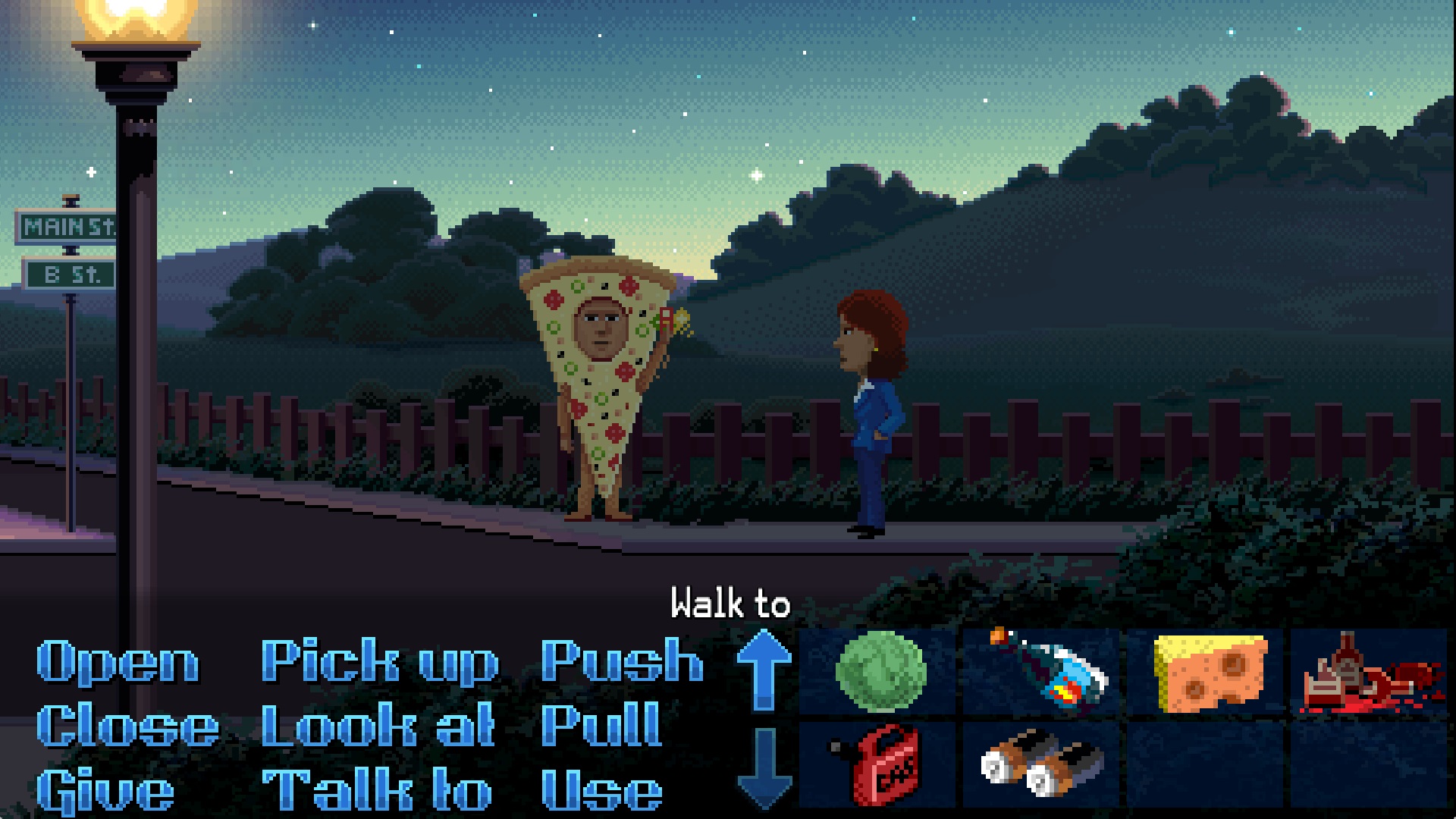
While crowdfunding platforms like Kickstarter aided Thimbleweed Park years prior, raising $600,000 against a $375,000 goal (with private investors covering half the final budget), Gilbert now views Kickstarter as "basically dead these days as a way of funding games." He laments the difficulty of funding even a Thimbleweed Park sequel.
Comparing the current landscape to his early career, Gilbert criticizes today's major publishers as "very analytics-driven." He believes their formulaic approach leads to a homogenization of games. "When we were starting out, we couldn’t do that because we didn’t know what made this money, so it was... a lot more experimenting," he recalled. This fosters his appreciation for the indie game market, which he sees as a haven for creativity, "strangeness, and bizarreness."
Run for It
After the disappointment of his failed RPG, Gilbert revisited a prototype developed during a 2019 game design meet-up. This "Runner" prototype centered on evading the bottom of a constantly scrolling screen while using limited-ammo weapons against enemies. Initially, manual aiming felt like "cognitive overload," leading him to implement an automatic aiming and firing system—an idea he conceived before its popularization by games like Vampire Survivors. While he enjoyed Vampire Survivors, Gilbert found its style "a little too much ‘ADHD’ for me," feeling akin to playing a slot machine.
His less frenetic "Runner" prototype, however, proved "a lot of fun," particularly in group settings where observers would "be laughing and cheering as you... escape danger at the nick of time." Much of the art from his scrapped RPG project was repurposed to develop "Runner" into Death by Scrolling.
The game initially lacked a unifying theme, with players simply "running, you know?" This changed during the last six months of development when Gilbert introduced the concept of running through a repeating purgatory, relentlessly pursued by Death personified as a grim reaper. Weapons can temporarily stun Death, but not stop his pursuit before a stage's end.
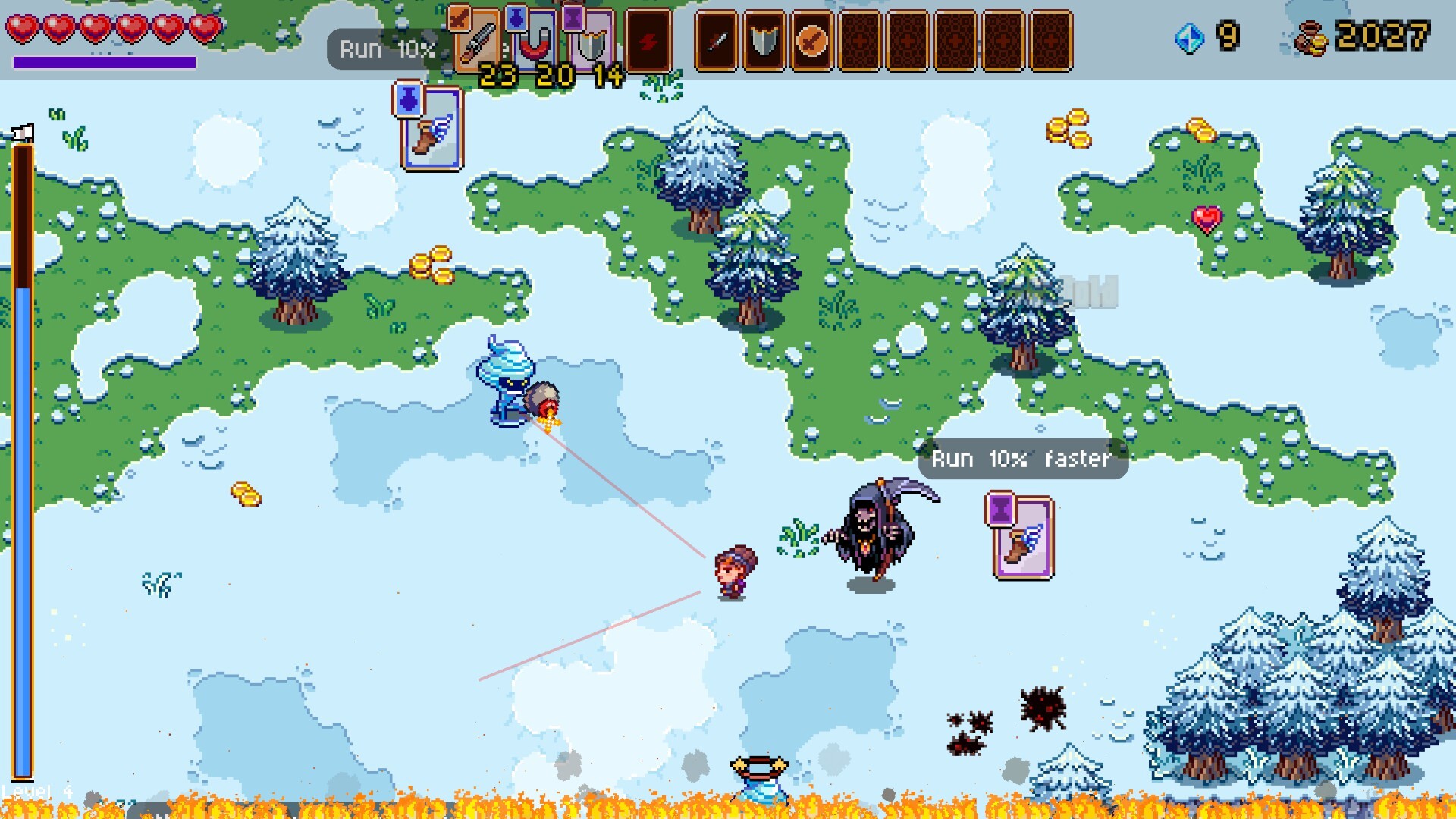
"Because he can’t be killed and because he’s an instant kill for you, it’s a very unique thing you really kinda need to avoid," Gilbert explained. "You’re running along, getting gold, gaining gems, and then, boom, you hear that [music], and Death is on the screen, and you kind of panic for a moment until you orient yourself."
Is Anyone Reading This?
Gilbert admits that writing for an action game, especially one with repetitive gameplay loops, presents unique challenges compared to his slow-burn adventure titles. He quickly observed that many players prioritize action over story, "clicking by the dialogue so fast that they don’t even see it." Surprisingly, he noted similar behavior even in his adventure games like Thimbleweed Park and Monkey Island, where players skip dialogue if they believe they know the objective.
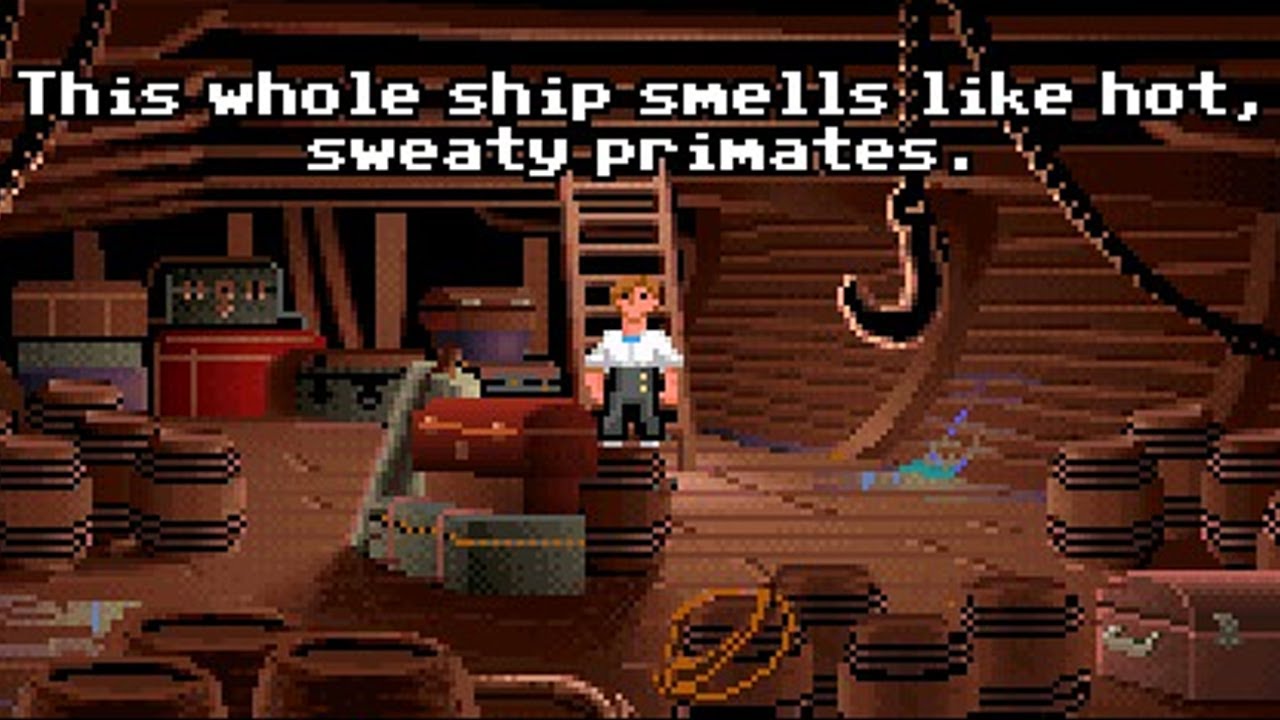
While acknowledging the frustration of players "fast forwarding through everything except the action parts," Gilbert concludes that developers must accept diverse player motivations. "There’s a certain percentage of people who will follow the story and enjoy it, and that’s OK," he stated. For others, the story "has got to be OK" to skip, requiring developers to ensure no critical information is embedded deep within optional narrative.
Those who delve into Death by Scrolling's narrative will discover Gilbert’s "less-than-subtle critique of the capitalist system." This critique is woven into the gameplay, which compels players to collect increasing amounts of gold to pay a newly profit-focused River Styx ferryman, now operated by "Purgatory Inc." Gilbert describes the conceit as "purgatory taken over by investment bankers," a reflection on how "capitalism has just taken over, and it really is the thing that’s causing the most pain for people." He aimed to convey this anti-capitalist sentiment "in a kind of humorous, sarcastic way."
Gilbert acknowledges a lifelong anti-capitalist stance, intensified by "recent events and recent things" that have pushed him further onto the "'Eat the Rich' bandwagon." He believes billionaires and similar wealth concentrations are "causing more harm than good."
Is the Point-and-Click Adventure Doomed?
Despite his history and the success of Thimbleweed Park, Gilbert expresses disinterest in returning to the traditional point-and-click format popularized by LucasArts' SCUMM Engine games. He likens the "use verb on noun" gameplay style to a "black-and-white silent movie," predicting it will feel dated to all but a niche of aging, nostalgic players, and likely won't "survive" in the long term.
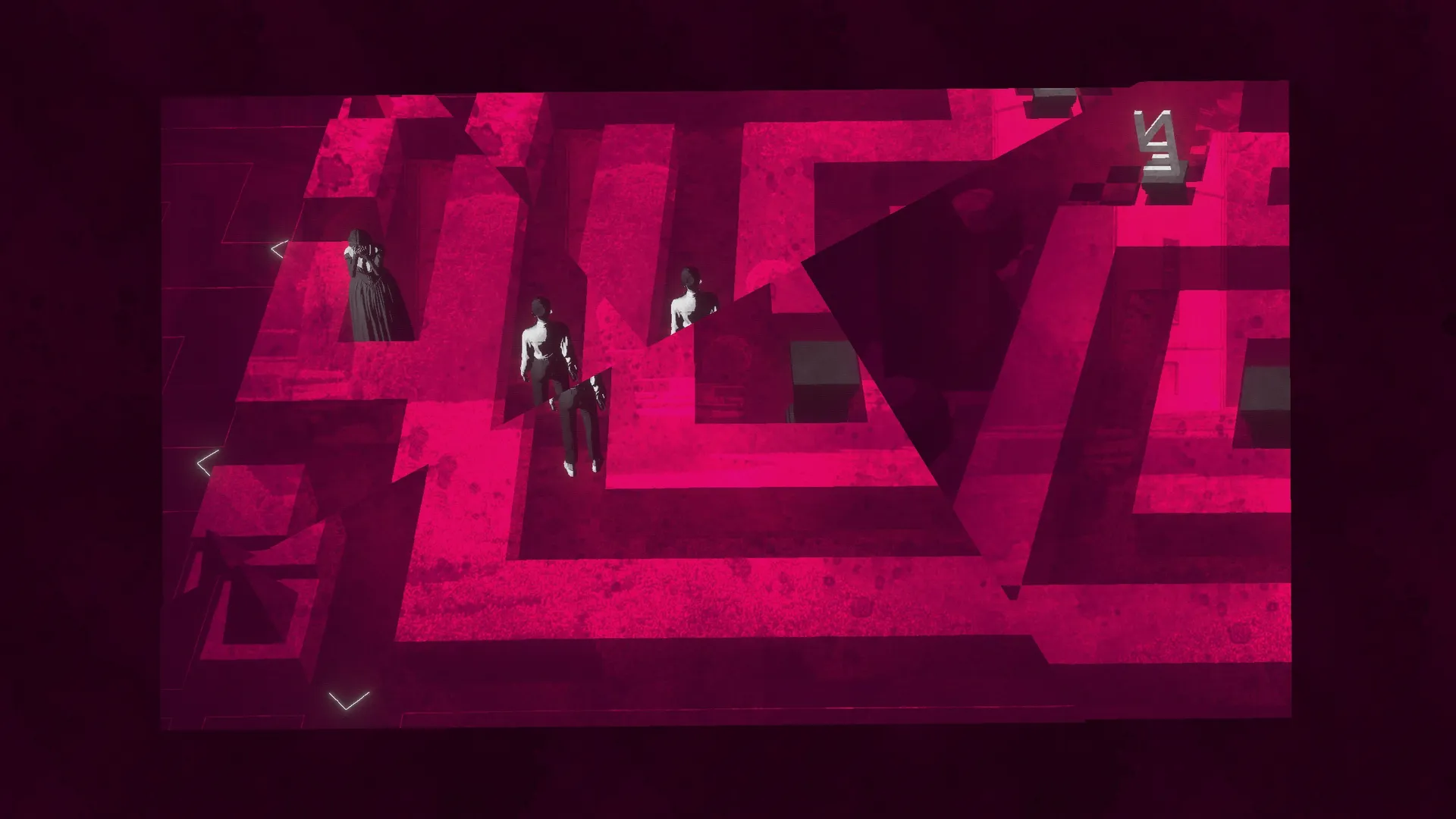
However, Gilbert remains optimistic about the broader future of adventure games. He cites contemporary titles like Blue Prince and Lorelei and the Laser Eyes as examples of how clever designers can create narrative-driven puzzles using modern techniques and interfaces, calling them "the future for adventure games."
If Disney, the corporate owner, offered him another opportunity with the Monkey Island franchise, Gilbert would envision a "true 3D world" experience, moving away from 2D point-and-click mechanics. He finds the challenge of "puzzle solving in [that] way" particularly interesting. Yet, given the mixed reception to gameplay changes in Return to Monkey Island, Gilbert acknowledges that such a departure from tradition might "ruffle even more feathers" among fans deeply attached to the classic Monkey Island experience.
Reflecting on his decades-long career, Gilbert also notes the dramatic shift in game promotion. The era of print magazines and press releases has given way to game streamers and YouTube development updates. This new landscape demands developers possess performance skills akin to how MTV shaped musicians. "The [developers] that are successful are not necessarily the good ones, but the good ones that also present well on YouTube," he asserts, viewing this as a potential "gate" for talent. "As a developer, you have to be a performer. And I’m not a performer, right? If I was making movies, I would be a director, not an actor."