Strategic Succession: Paving the Way for Lasting Organizational Impact
Explore why proactive succession planning is crucial for organizational continuity, strategy persistence, and cultural stability. Learn how leading companies like Apple, Microsoft, and Nike prepare future leaders long before transitions, emphasizing the importance of early exposure, diversified experience, and a unique leadership style for enduring impact.
Beyond fictional conglomerates, few companies command as much attention regarding succession planning as Apple. With recent leadership shifts, such as Steve Lemay's move into Alan Dye's former role, the perennial question arises: who will eventually lead at the very top? Should Tim Cook retire, will John Ternus assume the mantle? The persistent rumors, including the recent reappearance of Tony Fadell's name, highlight why these narratives captivate audiences. Apple's long-standing success in leadership transitions is well-documented.
Why Succession Matters
Most leaders consider succession only when a transition appears imminent. However, the profound truth is that succession fundamentally shapes an organization's understanding of time. Leadership is inherently temporary; the work itself is not. Every company, team, or practice will outlast its current guide, and the quality of this continuity determines whether the organization flourishes, stagnates, or disintegrates. Succession matters because it defines what transpires after a leader's tenure, not during it. It is the crucial mechanism through which strategy endures, culture stabilizes, and unfinished work finds its next steward. The following sections explore why the effects of leadership extend far beyond the individual leader, and why delaying transition planning until the "right moment" almost always proves too late.
Lasting Impact Transcends Tenure
Leadership possesses a prolonged half-life. The initiatives a leader sets in motion do not conclude when their tenure ends; rather, they mature, transform, or accelerate years later. A leader's true legacy isn't reflected in dashboards or quarterly figures logged during their time at the helm, but in the decisions whose consequences unfold under another's stewardship. Strategic choices compound gradually, cultural norms solidify into reflex, and the individuals promoted become the architects of the next generation of decisions.
This underscores the immense importance of succession. It's not merely about selecting the next person to run the company; it's about cultivating the conditions under which one's own work successfully adapts to reality. Steve Jobs didn't simply transfer Apple to Tim Cook; he entrusted him with years of architectural decisions, product philosophies, and organizational patterns. Cook's stewardship demonstrated the depth of Jobs's impact, as the company continued to scale and evolve without its founder present. Satya Nadella's transformation of Microsoft follows a similar trajectory: his achievements are built upon structures established during the Gates and Ballmer eras, even as he masterfully redirected the culture.
A leader seldom witnesses the complete trajectory of their decisions. They observe the initial chapters; their successor experiences the profound consequences. This embodies the core responsibility in succession planning: selecting an individual capable of carrying forward the unfinished aspects of one's work with clarity, and adapting them without compromising their original intent.
"There is no success without a successor." —Peter Drucker
Unpredictable Succession Timelines
Succession timelines are rarely as neat and predictable as leaders might wish. Health issues can emerge unexpectedly, a company's structure can shift faster than anticipated, markets can pivot, or a leader might quietly discover that their role no longer aligns with their current season of life. Succession is not a scheduled event; it is a state one must continually prepare for, as its triggering events seldom announce themselves in advance.
Even robust organizations experience constant flux. A division might become strategically paramount, imposing new demands on leadership. A product line could mature, necessitating a different operational rhythm. A founder might realize that the challenges of scaling bear little resemblance to the work of initial invention. None of these crucial transitions adheres to predictable intervals.
This inherent unpredictability is precisely why succession planning cannot await an opportune moment. Tim Cook stepping in for Steve Jobs was not a ceremonial gesture; it was an acknowledgment that Jobs's health could change at any time. Microsoft's leadership transitions occurred amidst architectural upheavals—cloud computing, mobile technology, enterprise sales—at a pace far exceeding what any traditional succession chart could reflect. Nike's seemingly seamless leadership handoffs are the culmination of decades spent exposing future leaders to the company's evolving priorities long before a formal transition appeared on the calendar.
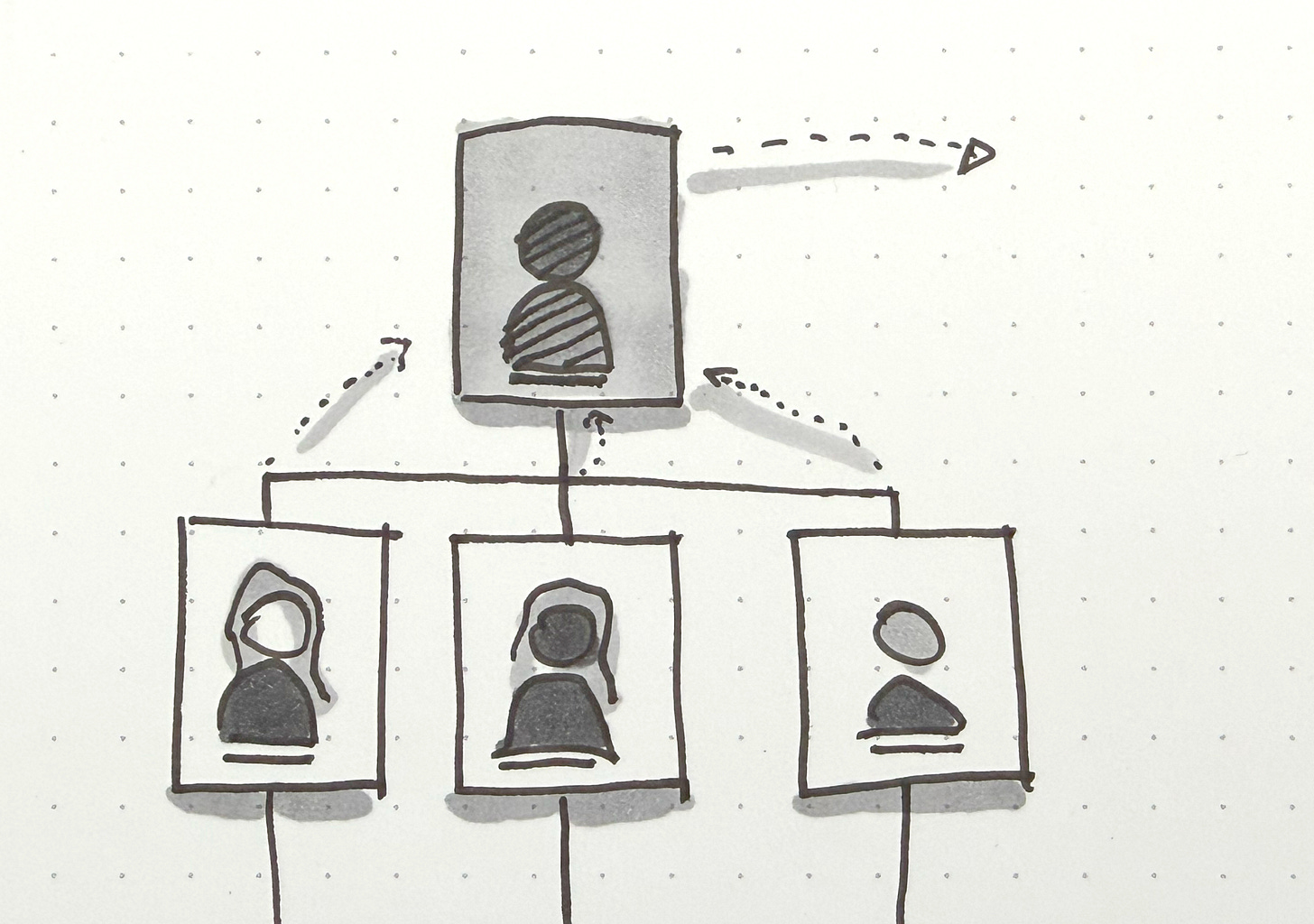
Leaders frequently delay contemplating succession until their work feels stable. Yet, transitions rarely conform to such logic. They often arrive mid-product cycle, during significant organizational restructuring, or amidst personal strain. The only sustainable approach is to initiate succession processes early, granting emerging leaders proximity to the organizational core. This ensures that if timelines abruptly shift, the organization maintains its momentum and stability.
Key Attributes for Successful Leadership Transition
Disney's recent leadership challenges serve as a compelling case study of what happens when a leader assumes a role without sufficient immersion in the critical decisions that define the company. Bob Chapek possessed extensive tenure and operational prowess, yet he had not truly experienced the creative and relational core that underpinned Bob Iger's leadership. Without this deep apprenticeship, the title alone could not inspire trust. Creative leaders resisted, Iger's influence persisted, and authority remained effectively split, regardless of official roles. Disney eventually reverted to its familiar center of gravity because the designated successor had not already been performing the most vital aspects of the job.
From an external perspective, succession often appears sudden. Internally, however, it is an extended process of exposure and calibration. Leaders who transition smoothly are those the organization has observed operating in various facets of the role for years.
Extended Shadowing Outperforms Abrupt Elevation
Tim Cook joined Apple in 1998, long before the company's grand resurgence was assured. Over the subsequent thirteen years, he meticulously rebuilt operations, skillfully navigated supply chain crises, and stepped in during Steve Jobs's medical leaves. Each instance served as a critical stress test. By the time he ascended to CEO, the organization already had a profound understanding of his ability to lead the company under immense pressure.
Satya Nadella enjoyed a similarly extensive preparatory period at Microsoft. Decades within the company, coupled with years leading Azure and the server business—areas that would ultimately define the company's future—provided invaluable experience. His appointment was not a reinvention; it was an amplification of existing strengths and expertise.
Mark Parker of Nike offers another exemplary case. Nearly three decades immersed in the company's product, marketing, and innovation engines fostered continuity rather than disruption when he assumed leadership.
Successors Have Already Performed Aspects of the Role
A seamless transition mandates that the successor has already engaged with enough of the company's inherent complexity that no major challenge feels entirely new. Cook, Nadella, and Parker all managed essential segments of their respective organizations before taking the top position. None required a "first 100 days" plan because they had already spent years practicing the role in fragments.
Successors Cultivate Their Own Distinct Style
A common pitfall is expecting a successor to merely mirror the incumbent. Cook's Apple operates with a more deliberate cadence than Jobs's. Nadella introduced a temperament significantly distinct from both Bill Gates and Steve Ballmer. Parker continued Nike's innovation engine without adopting Phil Knight's entrepreneurial bravado. Continuity is not synonymous with sameness; it is coherence. Organizations maintain stability and thrive when successors are empowered to develop and embrace their own authentic leadership styles.
The Handoff is Smooth When Anticipated by the Organization
When Apple announced Tim Cook as CEO, there was no widespread confusion about his identity or capabilities. The same held true for Nadella and Parker. Their visibility within the organization made their transitions feel not just acceptable, but inevitable. Succession functions most effectively when the narrative of future leadership is firmly established long before any formal title changes.
Effective Succession Planning
Succession is not a concern solely for CEOs; it applies to anyone leading a function, a product area, or even a small team. Leadership is invariably temporary; the work itself endures. Contemplating your successor is not an admission of impending departure; it is an affirmation that your team deserves continuity and stability. Organizations consistently perform better when the next echelon of leadership is intentionally developed, rather than improvised.
The Successor is Already Within the Ranks
Successors are not chosen at the exact moment of transition; they are cultivated well in advance. When the author hired Kevin Wong at Webflow as Director of Design for Core Product, it wasn't explicitly framed as succession planning, yet the author recognized he would be the ideal candidate to eventually take over. Even with intentions to stay indefinitely, circumstances often change. Kevin had already earned the trust of the team and was actively shaping the work, making the eventual transition not only feasible but also seamless and enduring.
Delegate, But Do Not Abdicate
A successor requires genuine responsibility: projects with significant stakes, decisions that carry real weight, and exposure to conflict and ambiguity. Delegation provides them the space to hone their judgment. However, this does not imply disappearance. Abdication generates confusion, whereas the thoughtful distribution of responsibility cultivates readiness.
Eliminate Linchpins
Linchpins introduce organizational fragility. When an excessive amount of knowledge or influence resides with a single individual—especially the leader—the organization becomes vulnerable to shocks. Effective succession planning necessitates distributing knowledge, meticulously documenting systems, and ensuring that no one, including the current leader, remains a single point of failure.
Understand the Industry Landscape
A successor must possess a deep understanding of the environment they are inheriting. Bob Chapek's tenure at Disney illustrated that mere longevity in a company does not adequately prepare someone for the intricate creative and economic logic of the coming decade. A successor who fails to grasp the industry's evolving direction cannot effectively guide the organization forward. A crucial part of the current leader's role is to provide that early and comprehensive exposure.
Adapt the Plan
Succession is a dynamic, living structure. The individual initially considered for succession may evolve into a different role. The organization itself may transform. External forces can accelerate or decelerate the timeline. The ultimate objective is not rigid precision, but resilience—ensuring that multiple capable leaders could step in with clarity and credibility when the moment truly demands it.
The Responsibility of a Graceful Departure
Every leader eventually reaches a juncture where their primary contribution shifts from the work they are actively doing to the conditions they leave behind. Succession planning is the art and craft of managing this critical transition. It is the profound recognition that leadership is custodial—one is temporarily entrusted with a set of decisions, relationships, and long-term strategic bets on behalf of those who will eventually inherit them. Effective leaders treat continuity with the same gravity they apply to strategy. They construct systems designed to outlast their personal presence, develop individuals capable of reinterpreting the work for future chapters, and architect an organization that can continue its momentum unimpeded when they step aside.
The true measure of leadership is not how impressive things appear during one's tenure, but how stable and poised the organization feels after one's departure. Succession, at its core, is an act of profound stewardship. It is the mechanism by which one ensures the foundational work remains possible long after one's own signature fades from the organizational memorandum.