Why Your Vibe-Coded Project Needs an Experienced Developer
Explore why AI-generated 'vibe code' often falls short of production readiness. Learn how experienced developers bridge the gap between prototype and product by addressing common issues like technical debt, poor architecture, and security flaws, ensuring long-term project sustainability.
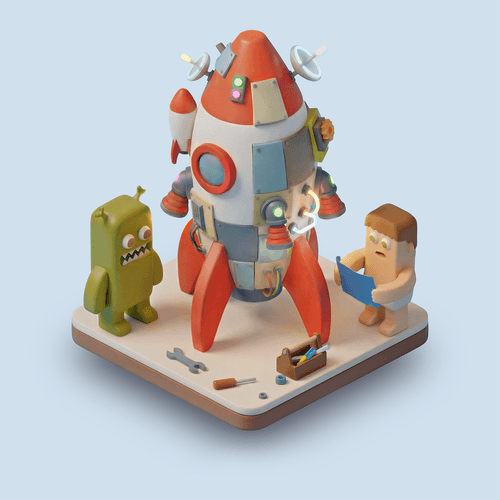
Having closely observed numerous 'vibe-coded' projects, it's evident that the gap between a prototype and a production-ready product is often wider than perceived, eventually becoming impossible to ignore. This article will explore the reasons behind this discrepancy, highlight the invaluable role of experienced developers in bridging it, and provide a real-world example from Evil Martians' open-source endeavors.
The advent of Large Language Models (LLMs) has revolutionized development, giving rise to a new paradigm: 'vibe coding'. In this approach, users describe their desired outcome, and AI generates the corresponding code. This eliminates the need for users to master syntax or understand frameworks, allowing ideas to materialize rapidly.
This method has proven effective. Individuals are creating functional applications in mere hours, designers are producing working prototypes, and founders are validating business concepts before committing to hiring developers. The barrier to entry for building software has never been lower.
However, a critical distinction exists: 'it works' is not synonymous with 'it’s ready for users.' A proof of concept (POC) does not equate to a polished product. While AI-generated code is functional, it often introduces underlying issues that only become apparent later.
This observation is not a critique of vibe coding itself, which is genuinely useful. Nevertheless, if the intention is to evolve a vibe-coded project into a sustainable solution, the involvement of a developer for refinement becomes crucial.
Why AI Generates 'Mediocre by Default' Code
AI models are trained on the vast expanse of publicly available code, encompassing everything from brilliant to average to poor quality. Statistically, the majority of code accessible online leans towards 'average,' often developed under deadline pressures rather than optimized for long-term excellence. Consequently, AI tends to reproduce the most common coding patterns, which are not always the optimal ones.
Consider React: a prevalent pattern observed online involves embedding business logic directly within components using hooks. Tasks like data fetching might employ useEffect, and calculations might use useMemo inline. While this approach functions and is widely taught, it typically does not scale effectively. This intertwines logic with the React framework, hindering reusability, complicating testing, and creating tangled dependencies that make performance optimization challenging.
An experienced developer instinctively understands when to abstract logic into separate layers for better architecture. AI, however, rarely suggests such advanced patterns unless explicitly prompted—a prompt unlikely to be given by someone unaware these patterns exist.
This highlights a broader limitation: it's challenging to prompt AI for less common, albeit superior, solutions. If a particular architectural pattern or best practice isn't ubiquitous on the internet, AI is unlikely to recommend it without specific guidance.
Common Problems in Vibe-Coded Projects
Through working with numerous vibe-coded projects, recurring issues consistently emerge. Individually, these are minor, but collectively, they significantly increase codebase complexity and technical debt, akin to 'death by a thousand paper cuts.'
1. Lack of Clear Domain Model
Business logic often becomes fragmented across various React components. Calculations might reside in one component, related validation in another, and state management spread across multiple hooks. This dispersal prevents a centralized definition of the system's core behavior, making it difficult to understand how functionalities operate.
2. Everything in One Place ('God Components')
Logic, API calls, and UI concerns are frequently consolidated into a few oversized 'god' components. These monolithic components handle too many responsibilities, meaning a minor change can inadvertently introduce bugs in unrelated functionalities.
3. Copy-Paste Over Reuse
Identical or nearly identical logic is often duplicated across the codebase. Fixing a bug in one instance requires remembering to apply the same fix to all other occurrences—a task easily overlooked and prone to errors.
4. TypeScript by Type Assertion
When encountering type errors, AI often resorts to type casting (as any or similar assertions), mimicking an inexperienced developer's quick fix. While this allows the code to compile, it undermines the fundamental benefits of TypeScript: clear documentation, type safety, and confidence during refactoring.
5. Security as an Afterthought
Vibe-coded projects can function perfectly for demos but often harbor subtle security vulnerabilities. Examples include raw SQL string usage, inadequate input validation, or sensitive data inadvertently logged. These issues may not break a prototype but pose significant risks in a production environment.
6. Accumulating Technical Debt
The cumulative effect of these rapid, unrefined decisions is a mounting technical debt. Over time, integrating new features or safely refactoring existing code becomes progressively slower and more expensive. In severe cases, rewriting significant portions of the codebase from scratch might become the more cost-effective solution.
Case Study: Harmonizer
Let's consider a practical example from our team. A designer on our team initially vibe-coded the first version of Harmonizer, a tool designed to generate accessible and consistent color palettes. The concept is straightforward: users define lightness levels and hues, and Harmonizer generates colors with guaranteed contrast using the OKLCH color model and APCA formula.
As a proof of concept, Harmonizer successfully validated the core idea, allowing the designer to test palettes and confirm its utility. This illustrates a perfect application of vibe coding.
The Problem: When we attempted to integrate Harmonizer into actual workflows, performance issues arose. Recalculating colors for a 10×6 palette took approximately 200 milliseconds. Every column hover action triggered a complete re-render of the entire grid, including headings, color cells, and buttons, resulting in a noticeably laggy and unresponsive interface. The initial design was not optimized for performance; all logic resided within React components, leading to unnecessary recalculations with every state change and a lack of separation between UI and business logic. Addressing this required specific architectural knowledge, which is challenging to convey to an AI without prior understanding.
Developer Intervention: An experienced developer stepped in to refactor Harmonizer. Key changes included: extracting logic into signal-based stores for fine-grained reactivity without full component re-renders; offloading computationally intensive color calculations to a web worker to free up the main thread; and restructuring the codebase into a core package capable of targeting multiple platforms.
The Result: The updated Harmonizer achieved a smooth 60 frames per second (fps) rendering, eliminated unnecessary re-renders on hover, and adopted an architecture that is significantly easier to extend. This new structure also facilitated the later development of a Figma plugin version, which would have been considerably more complex with the original code.
The Harmonizer proof of concept, developed via vibe coding, was undeniably valuable for validating the idea. However, its transformation into a robust product necessitated experienced developer intervention. It wasn't about rewriting everything from scratch, but rather identifying and strategically resolving critical architectural and performance issues.
Going Long Term
Vibe coding is not inherently flawed; rather, it represents an incomplete phase in the development process. It serves as an excellent tool for the initial stages of any project: testing concepts, validating ideas, and creating tangible prototypes. The Harmonizer POC exemplifies this perfectly; without writing a single line of code himself, the designer confirmed the viability of the idea, which is incredibly valuable.
However, a proof of concept is distinct from a finished product, and this gap cannot be bridged through continued vibe coding alone. It’s crucial to understand that the aforementioned issues don't manifest immediately. They accumulate over time, and the longer development proceeds without proper architectural cleanup, the more challenging and costly they become to rectify. It mirrors a codebase developed by an inexperienced team without senior oversight.
The project 'works'—until it doesn't.
To transform a vibe-coded project into a sustainable solution—one that can be reliably extended, maintained, and depended upon—the expertise of experienced developers is indispensable for cleanup, restructuring, and making sound architectural decisions. In fact, for long-term sustainability, involving an experienced developer from the project's inception is highly advisable. Such a developer can proactively plan the architecture, guide technical choices, and review AI-generated code to preempt issues before they escalate. Vibe coding validates; experienced developers ensure longevity.
Crucially, LLMs are also powerful tools for experienced developers, perhaps even more so than for beginners. Experienced developers possess the discerning eye, knowledge of best practices, and understanding of sound architectural patterns required to ask the right questions and leverage AI effectively. Therefore, feel free to vibe code your ideas, test them, and confirm their functionality. But when it's time to build a truly robust product, enlist the expertise of a seasoned developer for refinement.